By Joy Odor
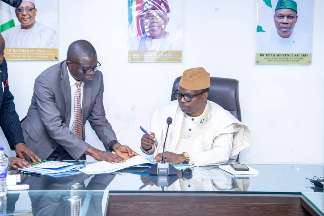
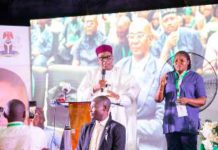
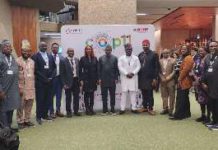
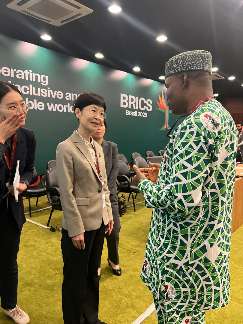
Nigeria’s Minister of State for Health and Social Welfare, Dr. Iziaq Adekunle Salako, reaffirmed the country’s commitment to tackling global health challenges at the 15th BRICS Health Ministers’ Meeting in Brasilia, Brazil.
Dr. Salako emphasized the importance of global solidarity in confronting complex health threats, including non-communicable diseases, pandemics, antimicrobial resistance, climate change, and dwindling health funding.
According to him, the Nigeria’s Health Initiatives include Implementation of the Health Sector Renewal Investment Initiative, anchored on four pillars: effective governance, efficient and equitable health system, unlocking healthcare value chain, and health security.
– Increasing domestic resource mobilization and enhancing pharmaceutical and diagnostic production capacity.
– Revitalizing primary healthcare, promoting pooled procurement mechanisms, and scaling digital health and artificial intelligence tools.
*Notable Achievements:*
– HPV vaccination campaign: over 14 million girls aged 9-14 vaccinated by May 2025, the highest number achieved globally in a single round.
– Commitment of an additional $200 million in the 2025 budget to sustain AIDS, Tuberculosis, and Malaria programs.
*Future Plans:*
– Hosting the next high-level ministerial conference on antimicrobial resistance in June 2026 in Abuja.
– Inviting deeper partnerships with BRICS nations on pharmaceutical innovation, biomedical research, phytomedicine development, and academic exchange programs.
Nigeria’s Minister of State for Health and Social Welfare, Dr. Iziaq Adekunle Salako, reaffirmed the country’s commitment to tackling global health challenges at the 15th BRICS Health Ministers’ Meeting in Brasilia, Brazil.
Dr. Salako emphasized the importance of global solidarity in confronting complex health threats, including non-communicable diseases, pandemics, antimicrobial resistance, climate change, and dwindling health funding.
*Nigeria’s Health Initiatives:*
– Implementation of the Health Sector Renewal Investment Initiative, anchored on four pillars: effective governance, efficient and equitable health system, unlocking healthcare value chain, and health security.
– Increasing domestic resource mobilization and enhancing pharmaceutical and diagnostic production capacity.
– Revitalizing primary healthcare, promoting pooled procurement mechanisms, and scaling digital health and artificial intelligence tools.
*Notable Achievements:*
– HPV vaccination campaign: over 14 million girls aged 9-14 vaccinated by May 2025, the highest number achieved globally in a single round.
– Commitment of an additional $200 million in the 2025 budget to sustain AIDS, Tuberculosis, and Malaria programs.
*Future Plans:*
– Hosting the next high-level ministerial conference on antimicrobial resistance in June 2026 in Abuja.
– Inviting deeper partnerships with BRICS nations on pharmaceutical innovation, biomedical research, phytomedicine development, and academic exchange programs.
*Global Collaboration:*
The meeting emphasized the importance of collective action to achieve SDG Goal 3, ensuring healthy lives and promoting well-being for all.
Dr. Salako concluded, “In the context of our shared humanity, we must act together. Humanity is one.”
The BRICS countries reaffirmed their commitment to building resilient, inclusive, and sustainable health systems amid global health uncertainties.