By Joy Odor
The Nigerian Air Force (NAF) has stepped up efforts to safeguard non-combatants in conflict zones with the completion of a specialised Civilian Harm Mitigation (CHM) course for a first batch of officers drawn from across its formations.
According to Air Commodore Ehimen Ejodame, the NAF Director of Public Relations and Information Headquarters in a press statement made available to newsmen in Abuja on Sunday, the five-day training, which ended on 15 August 2025 at the Air Warfare and Doctrine Centre (AWDC), Abuja, was designed to embed civilian protection as a core element of NAF’s operational doctrine.
The course involved pilots, drone operators, armament specialists, legal officers, and public relations experts, reflecting what the Service described as a “multi-disciplinary approach” to reducing harm in conflict environments.
The training, directed by the Chief of the Air Staff (CAS), Air Marshal Hasan Bala Abubakar, and coordinated through the Civil-Military Relations Branch, will run in three batches of about 30 officers each between 11 August and 5 September 2025.
It was delivered in partnership with Conflict, Security and Development Consult Limited.
Participants were taken through a rigorous curriculum that covered International Humanitarian Law in Nigerian air operations, rules of engagement, targeting protocols, and advanced methods of minimising collateral damage.
Modules also focused on the use of no-strike lists, sensitive target approval processes, and the careful selection of ordnance under operational pressure.
Air Marshal Abubakar, who earlier this year launched the NAF’s Civilian Harm Mitigation and Response Action Plan (CHMR-AP), said the initiative was aimed at institutionalising humanitarian standards in air operations.
“From the very beginning of my tenure, I made it clear that protecting civilians is not just a moral duty, it is a professional imperative,” he stated.
“We have already recorded fewer collateral damage incidents in recent months, and this training will further strengthen our officers’ capacity to apply precision, legality, and humanity in every mission.”
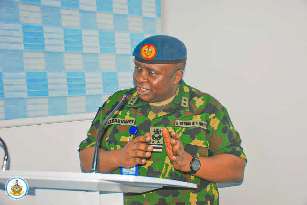
Representing the Chief of Civil-Military Relations at the closing ceremony, Air Vice Marshal Edward Gabkwet emphasised that NAF’s approach went beyond compliance with international law, framing civilian protection as a strategic advantage.
“When communities see that we take extraordinary measures to keep them safe, we build trust. That trust strengthens intelligence sharing and isolates hostile actors.
Protecting civilians is not only the right thing to do, it is the smart thing to do,” he said.
The remaining two batches of officers are expected to complete the CHM course by September, signalling the Air Force’s renewed commitment to civilian protection as a cornerstone of its operations.