By Joy Odor, Abuja
Nigeria’s democracy is once again under the spotlight as the Independent National Electoral Commission (INEC) and the European Union Election Observation Mission (EU EOM) jointly warned that failure to act on electoral reforms could compromise the integrity of the 2027 general elections.
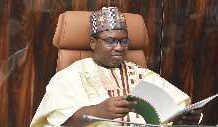
At a tense high-level meeting in Abuja on Thursday, INEC Chairman, Prof. Mahmood Yakubu, sounded the alarm that legislative inertia was stalling critical reforms needed to stabilize the nation’s electoral system.
“Elections are governed by law. Many of your recommendations require the review of our electoral laws. We appeal to the National Assembly for expeditious consideration of the reform proposals. Early passage of the law is critical to election planning. Uncertainty over the legal framework unsettles our work as elections draw nearer,” Yakubu warned.
Yakubu disclosed that out of 23 recommendations made by the EU after the 2023 general elections, eight (34.8%) were directed at INEC, while 15 (65.2%) were responsibilities of the executive, legislature, judiciary, political parties, civil society, media, and professional bodies.
He revealed that INEC has already acted on administrative recommendations within its power and submitted 142 proposals for reform to the National Assembly.
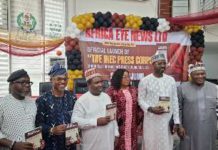
Welcoming the EU delegation led by Chief Observer Barry Andrews, Yakubu reiterated that Nigeria values international partnerships in strengthening democracy and confirmed that invitations would soon be extended to the EU, Commonwealth, AU, and ECOWAS to observe the 2027 general elections.
“We believe that the recommendations arising from your observation of our elections and processes help improve their quality. We will continue to deepen this partnership,” Yakubu affirmed.
But the EU pressed even harder, as the Chief Observer Barry Andrews, a Member of the European Parliament, insisted that Nigeria must move beyond half-measures and guarantee transparency if democracy is to survive.
“Election observation is not about interference; it is about strengthening democracy in Nigeria, in Africa, and across the world,” Andrews declared.
He commended INEC’s cooperation but warned that reforms in the judiciary, administration, and constitution remain too slow, with transparency in result publication still unresolved.
The EU team, which includes Ambassador Gautier Mignot and a panel of election experts, is in Nigeria for a week-long mission to evaluate reform progress.
It has also reviewed off-cycle governorship elections since 2023, describing them as a barometer of electoral credibility.
Both INEC and the EU agreed on one urgent point: unless Nigeria moves swiftly to pass electoral amendments, the 2027 general elections could be conducted under the same flawed framework that undermined past polls.
“Your recommendations help strengthen democracy in Nigeria. We will continue to deepen this partnership,” Yakubu assured, while confirming that the EU, AU, ECOWAS, and the Commonwealth would be formally invited to observe the 2027 elections.
For now, the warning is clear, time is running out, and the credibility of Nigeria’s next elections hangs in the balance.