
By Joy Odor
The European Union (EU) Delegation to Nigeria has has trained the Diplomatic Correspondents Association of Nigeria (DICAN) on Artificial Intelligence (AI) expected to equip journalists with the skills to navigate the challenges and opportunities presented by AI and social media.
According to the Charge d ’Affairs, EU Delegation to Nigeria, Ms Agnieszka de Torres Oliveira the training is in a bid to leverage on available technological tools to enhance the capacity of journalists,
Ms Agnieszka also informed that the training is also aimed to equip journalists with the skills to harness the potential of new media in their daily duties.
Oliveira emphasised the importance of integrating new media into traditional journalism practices, citing the increasing dominance of AI and social media in the information space.
Oliveira highlighted the importance of fact-checking in information management, given the potential for manipulation and misinformation on social media.
She ensured that European Union remain effective purveyors of public information.
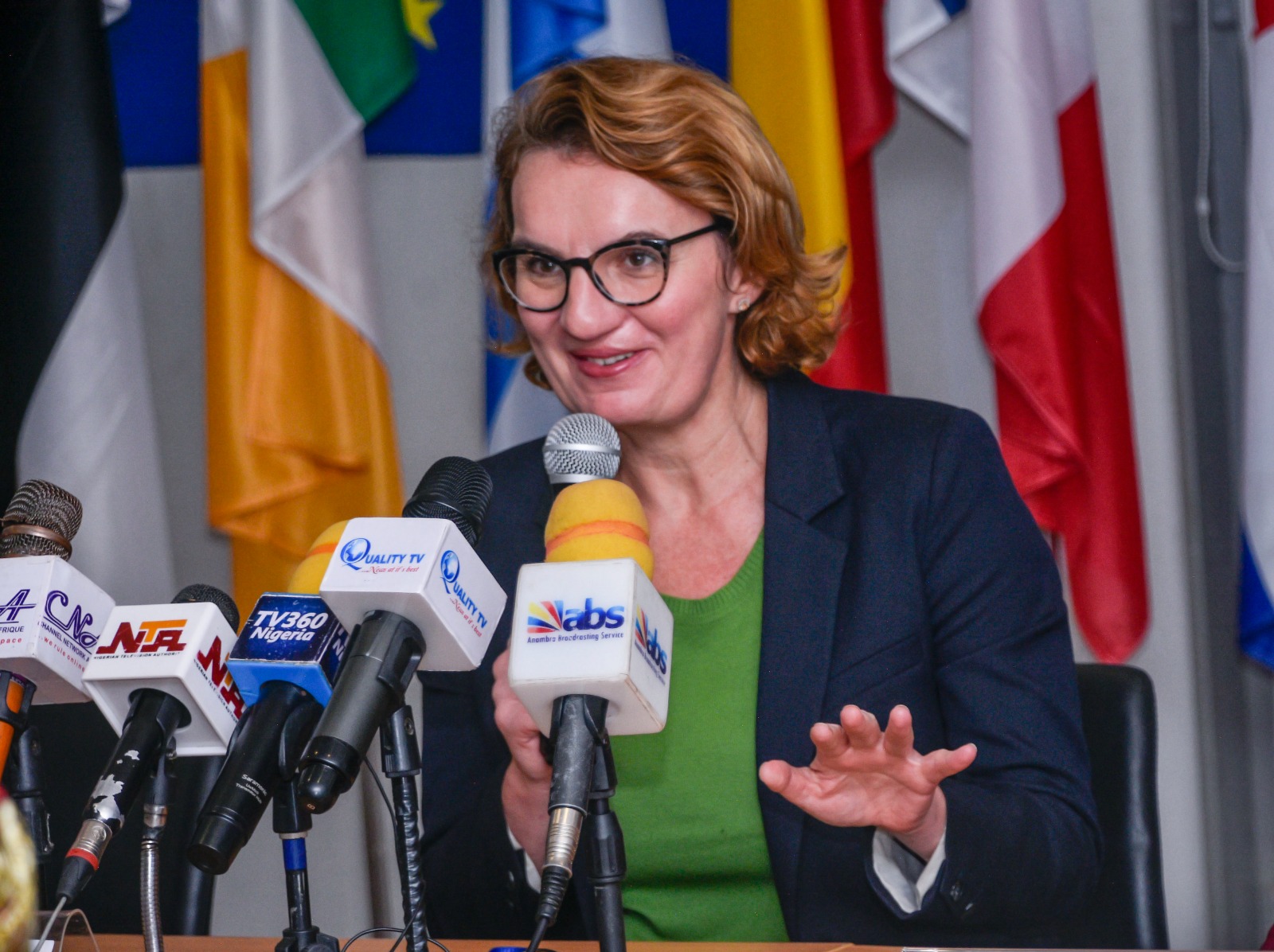
“We are pleased to welcome you to this training, which will provide you with hands-on skills to maximize the immense potentials of new media,” said Ms. Agnieszka de Torres Oliveira, Charge d’Affairs, EU Delegation to Nigeria, in her opening remarks.
“Journalists cannot afford to ignore the possibilities that these new media offer, as well as the threats they pose if not properly managed and harnessed,” she noted.
The training is part of the EU’s efforts to promote democracy and human rights, particularly freedom of expression.
“The media is an enabler of free and open debates, and social media has further expanded the frontiers of free speech,” Oliveira said.
“We believe that training journalists to be more effective in their work will strengthen democracy and make society better.”
The EU has recently adopted the AI Act, a comprehensive legal framework for AI that provides for transparency, human oversight, and accountability.
“Understanding how these new media work will be the first step in stemming these harmful effects and safeguarding the integrity of the information environment,” she said.