By Joy Odor | Abuja
Nigeria’s health sector is witnessing its fiercest overhaul in a decade as the Federal Government rolls out a sweeping workforce recovery plan, releases over ₦31 billion in arrears, and authorizes the recruitment of more than 23,000 new health workers, all in a determined push to end the nationwide strike by resident doctors and stabilize the system.
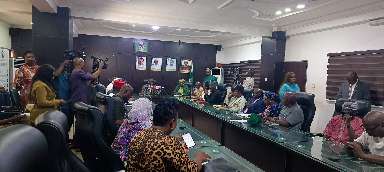
At a high-stakes press briefing in Abuja on Monday, Minister of State for Health, Dr. Iziaq Adekunle Salako loop led a united front of the ministry’s top officials, pledging “no going back” on reforms to fix decades-old distortions and restore public confidence.
“President Bola Tinubu has expressly directed that we do everything possible to bring resident doctors back to their posts,” Pate declared, apologizing to Nigerians affected by service disruptions. “We are taking firm, legitimate steps not quick fixes to reset the system sustainably.”
Salako disclosed that under a special presidential waiver, the ministry had recruited 14,444 health workers across 64 federal institutions in 2024, with an additional 23,059 new hires underway in 2025, marking the largest expansion of Nigeria’s health workforce in over a decade.
“Seventy-eight percent of those recruited last year were clinical staff, doctors, nurses, and midwives,” he said. “Resident doctors and consultants account for nearly half of ongoing hires.”
The Minister also confirmed that ₦21.3 billion had already been disbursed to clear arrears for striking doctors, with 60% already paid, and the balance to follow within days.
While acknowledging two unresolved issues professional relativity and non-doctor consultant appointments, Salako revealed that an independent industrial relations expert had been appointed to mediate “for a durable, system-wide solution.”
“We won’t repeat past mistakes of signing contradictory agreements with separate unions,” he stressed. “The health sector must negotiate as one team, not in silos.”
Minister of State said the Federal Government had released an additional ₦5 billion, bringing total recent disbursements to ₦25 billion to clear allowances and arrears for health workers and resident doctors.
“In August, ₦10 billion went to all health workers, ₦10 billion to the Medical Residency Training Fund, and ₦5 billion more has now been processed. Payments start this week,” Alausa confirmed.
He criticized the continuation of the strike despite active collective bargaining, warning that the CBA’s framework explicitly requires a “no-strike clause” during negotiations.
On the demand to place medical interns on the civil service payroll, Alausa clarified:
“Interns are trainees, not permanent staff. They serve for 12 months, then move to national service. Putting them on the civil service scheme will create fresh distortions.”
Salako further stressed that while the government values doctors, salary adjustments must align with fiscal realities.
“If possible, we’d pay ₦50 million monthly,” he said pointedly. “But within Nigeria’s means, doctors already earn about 50% more than the average health worker and health workers about 50% more than the average civil servant.”
Rounding out the federal team, Minister of State Dr. Iziaq Adekunle Salako announced a multi-pronged workforce recovery strategy to plug critical shortages and reposition the country for “brain gain, not brain drain.”
“We’re adopting global best practices. Some nations now export health professionals as an economic asset Nigeria will do the same, while keeping enough for our system,” Salako said.
The Minister revealed that Chief Medical Directors now have authority to recruit doctors and nurses on locum (temporary) basis pending formal recruitment, to prevent service collapse.
He also announced the creation of a Task Force on Hospital Compliance, mandated to conduct unscheduled visits to ensure that non-striking staff remain at their duty posts.
“Hospitals cannot be empty while bureaucracies run their course,” he said.
Salako confirmed that out of ₦41 billion owed under the 25%–35% salary adjustment, the government has already paid ₦31 billion, with the remaining ₦10 billion to be cleared “within 72 hours” following talks with Finance and Budget authorities.
Salako framed Nigeria’s health crisis as part of a global workforce battle, noting that while WHO recommends one doctor per 1,000 patients, Nigeria’s ratio is among the world’s worst.
“We’re not just stopping migration we’re rebuilding capacity and turning it into an export-ready health economy,” he said.
With the reforms now in motion from arrears clearance and expanded recruitment to higher retirement ages and harmonized negotiations, the Federal Government insists the message is clear: Nigeria’s health sector is open for reform, but closed to chaos.