By Reportcircle Abuja
Nigeria’s long-running quest for Universal Health Coverage (UHC) gathered renewed momentum on Thursday as the Federal Government and the Cross River State Government jointly signalled a fresh era of political commitment, expanded financial protection, and equitable access to healthcare for all citizens.
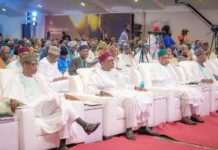
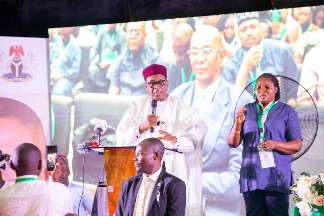
The declaration set the tone for the opening of the 66th National Council on Health (NCH) in Calabar, Nigeria’s highest decision-making platform on health policy.
The Governor of Cross River State, Senator Prince Bassey Edet Otu, represented by Deputy Governor Rt. Hon. Peter Odey, opened the meeting with a call for deeper synergy between federal and state governments, stressing that Nigeria cannot achieve robust primary healthcare without shared responsibility and sustained financing.
He spotlighted Cross River’s recent social and health reforms from six-month maternity leave to expanded health insurance, targeted rural palliatives, and the renovation of over 100 primary healthcare centres backed by the World Bank IMPACT project, the Basic Health Care Provision Fund (BHCPF), and state funds.
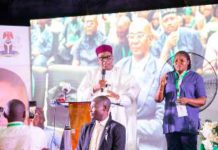
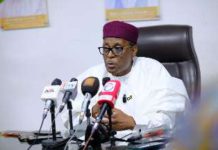
Delivering the keynote, the Coordinating Minister of Health and Social Welfare, Prof. Muhammad Ali Pate, commended the state’s efforts and noted early signs of national progress: improvements in maternal mortality, rising public confidence in PHCs, and better sector coordination.
Pate disclosed major financial commitments:
₦68 billion secured for vaccine financing, and
₦50 billion released to clear arrears owed to health workers.
He urged states to raise their 2026 health budgets by at least one percent over 2025 levels to sustain these gains.
“All of this is not just money frittered away,” he emphasized. “It is ring-fenced to strengthen PHCs, equip frontline workers, and ensure Nigerians have access to essential commodities from HIV and TB diagnostics to malaria test kits and bednets.”
Minister Pate underscored that achieving UHC hinges on political will, unity of purpose and collective societal responsibility.
Earlier, the Minister of State for Health and Social Welfare, Dr. Iziaq Adekunle Salako, said Nigeria’s health insurance coverage now at 17 percent, up from 3 percent in 2019 and representing 37.4 million people is still moving too slowly to meet national targets.
He applauded states leading the charge, including Lagos, Kaduna, Enugu and Cross River, which has hit 28 percent coverage through its UHC Coordination Centre.
Salako highlighted sweeping progress in revitalising PHCs nationwide, citing over 10,800 upgraded centres and a surge in national PHC quality scores from 42 percent to nearly 70 percent.
He also credited development partners for their pivotal role:
World Bank’s IMPACT and HOPE Health projects,
U.S.-funded integrated HIV/TB interventions,
Global Fund support for HIV, TB and malaria,
WHO, UNICEF and GAVI’s contributions to immunisation and new vaccine introductions.
He noted that development cooperation is now “more strategically aligned with national health priorities than ever before.”
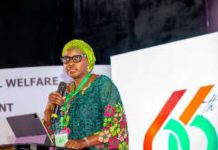
Permanent Secretary of the Federal Ministry of Health and Social Welfare, Daju Kachollom, lauded Cross River for its hospitality and the intense technical work undertaken so far.
She praised state commissioners, development partners and ministry leadership, while celebrating states such as Sokoto, Jigawa, Zamfara, Taraba, Delta, FCT, Plateau and Ekiti for exceptional implementation of last year’s NCH resolutions.
She also commended the NCH Secretariat and Local Organising Committee, led by Cross River Health Commissioner Dr. Henry Egbe Ayuk, for a well-executed council meeting.
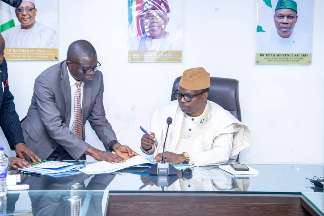
Adding a symbolic touch to the day’s proceedings, the World Health Organization presented vehicles and medical equipment to the Cross River State Government, further strengthening the state’s health system.
The 66th NCH continues with policymakers, technical experts and development partners expected to shape decisions that will determine the trajectory of Nigeria’s healthcare system for years to come.