By Joy Odor, Abuja
In the oil-rich heart of Delta State, the story of representation is being rewritten not with slogans, but with scalpels and legislation.
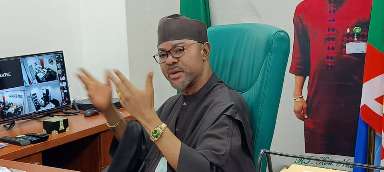
Hon. Nnamdi Ezechi, who represents Ndokwa East, Ndokwa West and Ukwuani Federal Constituency, says his latest medical outreach is proof that politics can heal as well as govern.
“Health is wealth,” he said in Abuja after wrapping up the free medical programme that provided surgeries, drugs, and consultations for hundreds across the three councils. “When you take treatment to people who can’t afford hospital care, you restore hope. The feedback shows how urgent this need is.”
Rather than wait for hospitals to come, Hon Ezechi took doctors to the doorsteps of those left behind, a move that turned rural schools, halls, and tents into temporary clinics.
“Our fathers and mothers sometimes can’t afford care,” he said. “Taking medical teams to their villages helped them greatly and it worked.”
He vowed to make the outreach a yearly exercise. “We will not stop until every community in Ndokwa is covered,” he said.
But for the lawmaker, healthcare is only one piece of the plan. He’s building what he calls a “triangle of progress” health, energy, and education.
Pointing to the newly established Federal University in Ndokwa, now recruiting staff and admitting students, Hon Ezechi said it symbolizes a new phase of federal presence in the area.
“It’s about connecting to the centre so our people feel the impact of governance,” he said.
He also highlighted the industrial park and free trade zone under construction, expected to provide 5,000 to 6,000 jobs, already attracting multinational investors — one from the United States.
“This is another great opportunity,” he said. “It shows Delta can move beyond oil and create real jobs. Our youth will feel it.”
The Rep Member describes his constituency as “a ready canvas” for investment.
“Ndokwa is blessed with natural resources and peace,” he said. “The governor, Rt. Hon. Sheriff Oborevwori, is ensuring an enabling environment for business. I call on investors this is the best ground for growth.”
According to him, peace has become the region’s biggest asset. “Investors can now work here without fear. Peace is our new comparative advantage,” he added.
The Lawmaker was, however, quick to admit that not all projects are on track.
He expressed concern over a newly built market in Kwale that remains unused months after completion.
“The market belongs to the government, not a few individuals,” he said. “I’ve told the council chairman to allocate stalls fairly and open it. A government project has no value if it’s not working for the people.”
Speaking on NNPC, Hon. Ezechi is pushing accountability from his seat in the National Assembly.
His motion before the House Committee on Gas Resources seeks to investigate alleged irregularities at NNPC Limited and its subsidiaries with a four-week deadline for a report.
“The motion isn’t for noise,” he said. “It’s to correct abnormalities and ensure transparency in how national assets are managed. Lawmakers make laws and oversee implementation and we will enforce accountability.”
He thanked Speaker Tajudeen Abbas (PhD) for supporting the motion, warning that those found culpable would face the law.
“In Nigeria, too many people think no one is watching. That era is over,” he said.
On mass Defection, Hon Ezechi’s defection from the PDP to the APC raised eyebrows, but he insists it was a calculated, collective move.
“It wasn’t a personal decision,” he said. “The PDP’s internal crisis was holding Delta back. We needed to align with the centre to deliver results.”
He dismissed partisan bickering as irrelevant to service delivery.
“Political parties are tools; leadership is what matters,” he said. “It’s not about party colours, it’s about who gets things done.”
Whether in the villages of Ndokwa or the chambers of the National Assembly, Ezechi’s message is clear: representation must translate into results.
“We’re not just treating patients,” he said. “We’re treating the system.”
And in a country where talk often outweighs action, that kind of politics one that blends compassion with accountability may be exactly what Nigeria needs more of.