By Reportcircle Abuja
The Nigerian Senate turned Wednesday into a political courtroom as it subjected three of President Bola Tinubu’s Ambassadorial nominees to a bruising public screening, one that resurrected the ghosts of a notorious corruption saga and tested the limits of political memory.
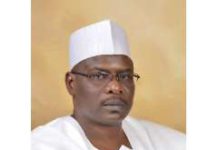
At the centre of the storm was Ayodele Oke, former Director-General of the National Intelligence Agency (NIA), whose nomination reopened the file on the explosive 2017 Ikoyi apartment cash scandal that once rocked Nigeria’s security establishment.
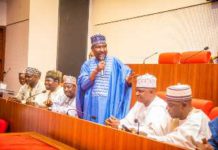
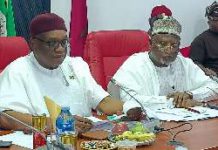
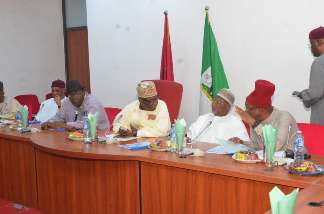
Alongside Oke, the Senate Committee on Foreign Affairs, chaired by Senator Sani Bello (APC, Niger North), also screened Kayode Are (Ogun State) and Aminu Dalhatu (Jigawa State). But it was Oke’s appearance that drew the sharpest scrutiny—and the stiffest resistance.
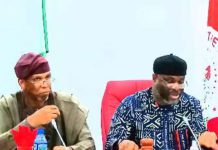
Moments into the session, Senator Ali Ndume and Henry Seriake Dickson lit the fuse, pressing Oke to confront his controversial past head-on.
The Senators questioned how a man once linked to one of Nigeria’s most sensational cash seizures could be trusted with a sensitive diplomatic posting.
In response, Oke produced official court documents before the Committee, affirming that all charges against him and his wife were struck out in 2023 by the Lagos Federal High Court, effectively clearing him of wrongdoing.
After reviewing the papers and listening to Oke’s explanations, Senator Bello declared the Committee satisfied, noting that the nominee had provided legal proof of exoneration.
Oke’s supporters wasted no time reframing the narrative.
They pointed to a long intelligence and diplomatic career that includes his tenure as NIA Director-General from 2013 to 2017 and postings at the Commonwealth Secretariat in London.
Within security circles, Oke is regarded as a seasoned intelligence operative with deep exposure to international relations credentials, they argue, that fit a non-career ambassadorial role.
But his rise was violently interrupted in 2017.
That year, anti-corruption operatives uncovered staggering sums inside a private apartment on Osborne Road, Ikoyi, Lagos: $43.4 million, £27,800 and ₦23.2 million, allegedly linked to Oke and his wife.
The discovery triggered an avalanche of money-laundering allegations, court proceedings and a public outcry over elite corruption.
When Oke and his wife initially failed to appear in court, an arrest warrant followed.
For years, the case symbolised the uneasy overlap between national security, secrecy and unaccounted wealth.
Then, quietly in 2023, the case collapsed. The charges were withdrawn. The court struck it out.
On Wednesday, those court papers became Oke’s political shield.
President Tinubu formally forwarded the three names to the Senate last week in a letter read on the floor by Senate President Godswill Akpabio.
The trio were sent ahead of 32 additional nominees still awaiting formal presentation.
With Wednesday’s screening concluded, the Foreign Affairs Committee is now expected to submit its report to the plenary, where senators will debate and vote on confirmation.
For Oke, the stakes are existential—not just about diplomacy, but about redemption.
Wednesday’s drama exposed a deeper contradiction in Nigeria’s governance: the legal system may clear a man, but public memory does not always forget. Between court judgments and moral verdicts lies a dangerous political fault line.
With the committee’s conditional green light, Oke’s nomination now stands on firm legal ground but the echoes of Ikoyi still trail him into the diplomatic arena.
As the Senate prepares for final confirmation, one truth is unmistakable: Nigeria’s foreign missions are not just platforms of diplomacy, they are also battlegrounds of history, power and public trust.