…as Nkoyo Toyo, others Demands Reform, Gender Bill Rekindles Push for Women’s Political Representation
By Joy Odor, Abuja
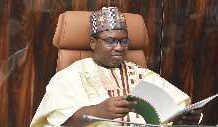
Nigeria’s long battle for women’s political inclusion gained renewed momentum on Wednesday as the Chairman of the Independent National Electoral Commission (INEC), Prof. Mahmood Yakubu, declared his support for affirmative action, warning political parties against treating gender inclusivity as tokenism.
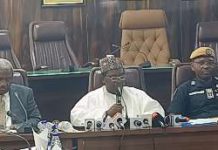
Speaking during an advocacy visit by the Women’s Collective Forum to INEC headquarters in Abuja, Yakubu said affirmative action backed by law remains the surest path to securing women’s rightful place in Nigeria’s politics.
“The most effective way of ensuring greater representation for women and other marginalised groups in legislative assemblies is affirmative action supported by clear legal provision, as is the case in many jurisdictions,” Yakubu stated.
He described the ongoing constitutional and Electoral Act review as “a golden opportunity” for lawmakers to embed gender quotas, stressing that Nigeria could not achieve credible democracy without equitable participation of women.
Yakubu highlighted INEC’s internal progress, noting that women head 55% of the Commission’s directorates and occupy key state-level posts.
He added that INEC has institutionalised gender inclusivity through its Gender Policy and Department of Gender and Inclusivity.
Still, he sounded a note of warning: “Political parties must go beyond lip service and deliberately open up leadership and elective spaces for women, youths, and persons with disabilities.”
Leader of the advocacy delegation, Ambassador Nkoyo Toyo, delivered a fiery call for sweeping reforms in Nigeria’s political culture.
The former lawmaker accused political parties of recycling exclusionary practices that leave women, youths, and persons with disabilities on the margins.
“Will these parties represent Nigerians, or will they simply recycle the status quo?” Toyo challenged.
Describing women as the “engine of resilience and productivity” in Nigeria, she warned that continued exclusion would further damage the country’s standing in global diversity and inclusion indices.
“If we fail to integrate the voices of women, young people, and persons with disabilities, we fail our democracy,” she declared.
Toyo urged INEC to hold newly registered political parties accountable, pressing them to prove their commitment to real inclusivity.
She closed on a hopeful note, envisioning a Nigeria where the contributions of women and other under-represented groups are woven into the nation’s political fabric.
Veteran Gender Rights Advocate Prof. Jibrin Ibrahim, who joined the dialogue, recalled decades of struggles to expand women’s space in politics, including past victories on nomination fee waivers that were later sabotaged by political intrigue.
He called on lawmakers to pass the gender bill and correct what he described as a “historical injustice” that has denied women a fair voice in decision-making for too long.
At the heart of the renewed advocacy is a landmark gender bill currently before the National Assembly.
The proposed law seeks to reserve at least one Senate seat per state for women, six women-only seats in the House of Representatives, and three in each State Assembly.
Supporters say the reforms will finally give Nigerian women, who make up nearly half of the electorate but hold less than 7% of elective offices, real power at the decision-making table.
“Women are not just voters; they are leaders,” one coalition leader stressed. “A democracy that excludes half of its people is unjust and dangerously incomplete.”
The advocacy visit signals intensifying public pressure on lawmakers to act.
For campaigners, the choice before Nigeria’s leaders is clear: embrace reform that empowers women and strengthens democracy, or risk perpetuating a broken system.
As Prof. Yakubu assured, INEC stands ready to be a “steadfast partner” in the struggle.
For Toyo and other advocates, the moment is historic: an opportunity for Nigeria to rewrite its political story, this time with women firmly at the table where power is shared.