By Joy Odor, Abuja | August 8, 2025
Nigeria’s electoral landscape may be on the verge of a historic shift as the Independent National Electoral Commission (INEC) and the Nigerian Correctional Service (NCoS) have thrown their weight behind granting voting rights to inmates, a move that could enfranchise tens of thousands of citizens currently behind bars.
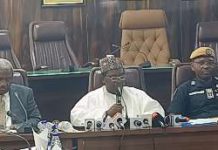
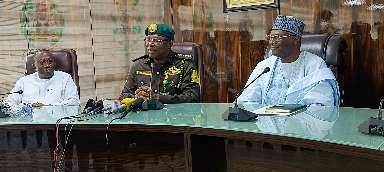
At a courtesy visit high-level meeting in Abuja on Friday by the Comptroller-General (NCoS) and his team to INEC Chairman Prof. Mahmood Yakubu, both leaders
reaffirmed that incarceration, especially for those awaiting trial, should not erase a citizen’s constitutional right to vote.
With over 81,000 inmates in Nigerian correctional centres, two-thirds of whom are awaiting trial, both leaders stressed that denying them the vote contradicts constitutional provisions, court rulings, and global democratic norms.
“The right to vote is a human right that cannot be taken away simply because a citizen is serving time in a correctional facility,” Prof. Yakubu declared, citing Ghana, Kenya, and South Africa as examples where inmates participate in national elections.
The INEC boss referenced a 2014 Federal High Court judgment and a 2018 Court of Appeal ruling in Benin, both affirming the voting rights of awaiting trial inmates.
He revealed that a joint INEC–NCoS Committee had already begun mapping out the logistics for inmate voting, including access for voter registration, creation of polling units inside facilities, voter education, and mechanisms for political party agents, election observers, and the media to ensure transparency.
According to him, political parties, election observers, and the media would need access to correctional centres to ensure transparency, while campaigns and polling agent deployment must be addressed in the process.
Yakubu also urged lawmakers to provide explicit legal backing in the ongoing electoral reforms, warning that Section 12(1)(e) of the Electoral Act 2022 leaves room for conflicting interpretations.
Earlier in his address, Nwakuche, made a direct appeal for urgent action, insisting that inmate voting is not a privilege but a constitutional guarantee.
“Even while in custody, inmates remain citizens of this great nation. The mere fact that they are incarcerated should not deny them the right to vote,” he said, noting that the National Assembly had recently passed a resolution in support of inmate voting.
The NCoS Boss argued that the reform would not only uphold fundamental rights but also strengthen public trust in Nigeria’s democracy.
Both institutions pledged to intensify collaboration with civil society groups like the Carmelite Prisoners’ Interest Organization (CAPIO) and work closely with the National Assembly’s Joint Committee on Electoral Matters to make inmate voting a reality, possibly in time for the 2027 general elections.
If implemented, the policy could set a new precedent in Nigeria’s democratic evolution, making the ballot box accessible to one of the country’s most overlooked populations.
The visit marks a significant step towards potentially enfranchising thousands of Nigerians behind bars, a move advocates say could set a new precedent for electoral inclusivity in the country.