By Joy Odor – Reportcircle News
Nigeria’s pension verification process has crossed a critical turning point as the Pension Transitional Arrangement Directorate (PTAD) rolls out a fully digital, multi-layered identity confirmation system that allows retirees to prove “aliveness” from anywhere in the world.
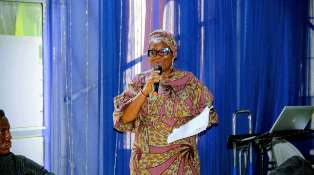
The transformation was unveiled by the Deputy Director of Pension Support Services, Dr. Ihuoma Ikemba-Efughi, during a capacity-building workshop for Pension Correspondents and members of the Association of Corporate Online Editors (ACOE), where she outlined how technology is dismantling one of the most traumatic rituals in Nigeria’s pension history: physical verification journeys.
For years, elderly pensioners travelled across states, sometimes on wheelbarrows, sometimes on hospital beds—just to remain on payroll. Many never returned alive.
That era, PTAD insists, is ending.
Under the new system, pensioners now confirm their continued eligibility through facial recognition or fingerprint biometric verification, using only a smartphone, tablet, or computer.
The process follows five automated steps:
1. Log into the PTAD verification portal
2. Enter pension and bank account details
3. Capture a live facial image or fingerprint
4. Perform an “aliveness test” by following on-screen head movements
5. Receive instant SMS confirmation of successful verification
If the system fails to match a face often due to aging pensioners can immediately switch to fingerprint verification or visit any PTAD office for photo updates.
PTAD recommends the SecuGEM biometric device as its standard hardware for fingerprint capture, describing it as the most reliable and user-friendly option currently in use across its offices.
Once a pensioner undergoes first-time physical biometric capture, all future confirmations shift permanently to the digital space.
“There is no more repeated physical verification after the first capture,” PTAD officials stressed. “You only do your aliveness check every six months from your home.”
Automated system prompts are sent to pensioners ahead of every verification window, ensuring no one is dropped from payroll due to missed confirmation.
For pensioners who are critically ill, immobile, or hospitalized, PTAD now conducts mobile biometric verification.
With certified medical reports, PTAD’s ICT team physically visits homes or hospitals to capture biometrics on-site, eliminating the deadly risks associated with forced travel.
This intervention directly targets the tragic cases repeatedly documented by the media, where aged retirees were kidnapped en route to verification centres or died during long-distance journeys.
PTAD also confirmed that loss of retirement documents no longer permanently disqualifies pensioners from verification.
Affected retirees can now regularize their status through:
A sworn court affidavit of loss
A letter of introduction from their former employer
With both documents, PTAD can legally reconstruct identity and resume verification processing.
Journalists raised concerns over the possibility of artificial intelligence being used to manipulate facial recognition.
PTAD acknowledged the concern but deferred detailed technical explanations to its ICT department, insisting that multi-layered security architecture is already built into the system to block impersonation and digital fraud.
Officials emphasized that only the first verification is physical. Every subsequent confirmation is strictly digital unless health conditions require mobile visitation.
“Once you are captured into the system, nobody will ever ask you to travel again,” PTAD declared.
With 13 operational state offices and expanding digital infrastructure, PTAD’s new verification architecture is fast becoming one of the most sweeping biometric identity reforms in Nigeria’s public service.
Beyond efficiency, the reform now carries a deeper weight: verification is no longer a physical punishment, it is a digital right.
Once a system built on queues, fatigue and fear, Nigeria’s pension verification battlefield has moved permanently online.