By Joy Odor | ReportCircle News, Abuja
In what analysts are calling a watershed moment for Nigeria’s mobility and public-safety architecture, the Federal Road Safety Corps (FRSC) on Thursday launched the long-anticipated Safe Wheel Magazine, a national flagship publication said will drive nothing less than “a full-scale mobility enlightenment revolution.
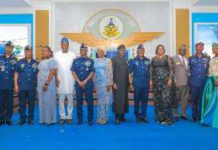
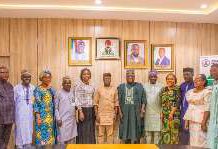
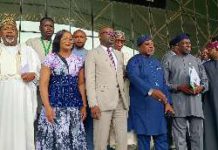
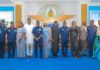
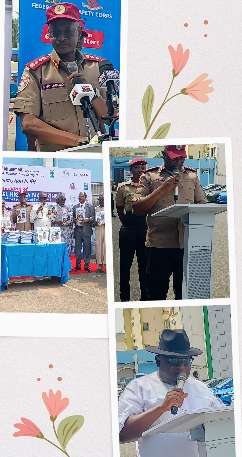
The unveiling themed “Renewed Hope for Safer Roads: Driving Safety and Logistics as Catalyst for Economic Development” erupted into a historic convergence of federal ministries, foreign-policy actors, education regulators, transport unions, security agencies, technology innovators and civil-society leaders at the FRSC Sector Command Headquarters in Abuja.
By mid-day, the atmosphere had transformed into what one attendee described as “the strongest institutional alignment Nigeria has witnessed on road safety in over twenty years.”
FRSC Corps Marshal Shehu Mohammed, MNI, opened the ceremony with a forceful declaration that set the tone for the day:
“Mobility drives almost 80 percent of Nigeria’s economic movement,” he said. “The safety of every journey must reflect our collective aspiration for national development.”
Mohammed described Safe Wheel Magazine as the new backbone of FRSC’s public-education agenda, “a magazine that brings knowledge, innovation, and responsible mobility directly to the public.”
Ahead of the country’s notorious Christmas–New Year travel surge, he announced strengthened national operations, including:
Intensified intelligence-review frameworks
Upgraded staff training
Expanded logistics deployment
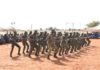
Reinforced nationwide patrol operations
He spotlighted the Corps’ free medical mission for commercial drivers at Babana Gobi Motor Park and celebrated FRSC’s handball champions Safety Shooters and Safety Babes “symbols of morale, wellness and national representation.”
“Informed citizens,” he said, “remains Nigeria’s greatest asset for building a safe and prosperous transportation system.”
He then invited High Chief Dr. Toe Ekechi, Chairman of Marketing & Media Ltd, to lead the formal unveiling: “To the glory of God and for safer roads in Nigeria and beyond,” Mohammed declared as applause roared through the hall.
Earlier, the Corps’ Public Education Officer, Assistant Corps Marshal Olusegun Ogungbemide, delivered what observers called one of the event’s most stirring addresses.
“This is far more than a magazine,” he announced. “Today, we ignite a national movement for safer roads and a more enlightened public.”
He recalled that FRSC once dominated the nation’s road-safety information space before its publications “went silent for years.”
“Months ago, the Corps Marshal insisted that it is unacceptable for FRSC not to have a consistent magazine. That single mandate revived this entire process.”
Ogungbemide paid glowing tribute to Mohammed celebrated throughout the hall as ‘Mr. Impact’, ‘Mr. Humanity’, and ‘Mr. Movement’ praising his reformist leadership and strategic foresight.
He listed the broad coalition backing the magazine:
NASENI
UBEC
Nigerian Customs Service
Galaxy Backbone
Major transport unions nationwide and others.
He outlined the magazine’s mission as a national advocacy platform, technical resource, behavioural-change engine, and record of the Corps’ unseen labour.
“Within its pages,” he said, “readers will encounter exclusive interviews, policy insights, innovations, and the real stories of our officers who risk their lives daily.”
His closing rally shook the hall:
“Government institutions, private sector, families, youth, rise with us.
Support this mission. Road safety is not government work alone; it is national accountability.”
Delivering the goodwill message, Dr. Godwin Isa, representing his Director-General described Safe Wheel Magazine as “an indispensable national asset.”
“Nigeria’s roads are more than infrastructure,” he said. “They are the arteries of commerce and the foundations of a thriving logistics network.”
He pledged deeper collaboration with FRSC on innovative engineering research, durable road materials, and cost-effective solutions.
“Let us build safer roads today for a more prosperous Nigeria,” Isa urged.
In a warm, empathetic message, Dr. Nafisat Shehu-Mohammed, wife of the Corps Marshal and President of the Road Safety Officers’ Wives Association (ROSOWA), emphasized grassroots safety education.
“When you read, you get informed,” she said. “This magazine is not the end it is the beginning.”
Her humorous admonition about avoiding the “Otte syndrome” frantic, overloaded, reckless driving drew laughter across the hall.
Representing the Minister of Foreign Affairs (MFA), Ambassador Yusuf Maitama Tuggar, OON, the Ministry’s spokesperson Kimiebi Imomotimi Ebienfa reframed road safety as a global-development issue.
“Every life lost on the road is a profound national loss,” he declared.
He said Nigeria’s highways serve as corridors for diplomacy, commerce, and AfCFTA integration.
He described Safe Wheel Nigeria as a soft-power instrument:
“Information is the bridge between policy and practice. This magazine strengthens national partnerships and international cooperation.”
Representing the Universal Basic Education Commission (UBEC), Mrs. Uche-Nwagbara insisted that safer roads begin in the classroom.
“Children must learn cooperation, empathy, discipline and safe behaviour,” she said.
UBEC sponsored a full center-spread in the maiden edition and reaffirmed long-term partnership through:
The Smart School Initiative
Teacher-training programmes
Safety-compliant infrastructure
Civic-education curriculum
In a thunderous, emotionally charged address, Alhaji Bala Musa, Director of Communication & Media at the National Orientation Agency (NOA), reframed road safety as a test of Nigeria’s moral fabric.
“The road is a mirror reflecting the values we live by,” he said.
He asked the question that froze the room:
“Do we stop at red lights because we fear the police or because we respect the lives of others?”
Citing African proverbs, civic ethics and national values, Musa declared:
“Safe Wheel Nigeria is more than ink on paper. It is a platform for civic education, national accountability, and social mobilisation.”
He closed with a sweeping message:
“Safe roads require educated children, enlightened citizens, responsible drivers, strong institutions, and a shared national ethos.”
What began as a magazine launch quickly evolved into a multi-institutional declaration of a cultural reawakening.
One truth echoed across the hall:
Nigeria’s road-safety crisis is not just an enforcement challenge, it is a national character challenge.
As the hall finally settled, one shared sentiment filled the air:
Safe Wheel Magazine is not merely a publication.
It is the beginning of a national transformation.