By Joy Odor
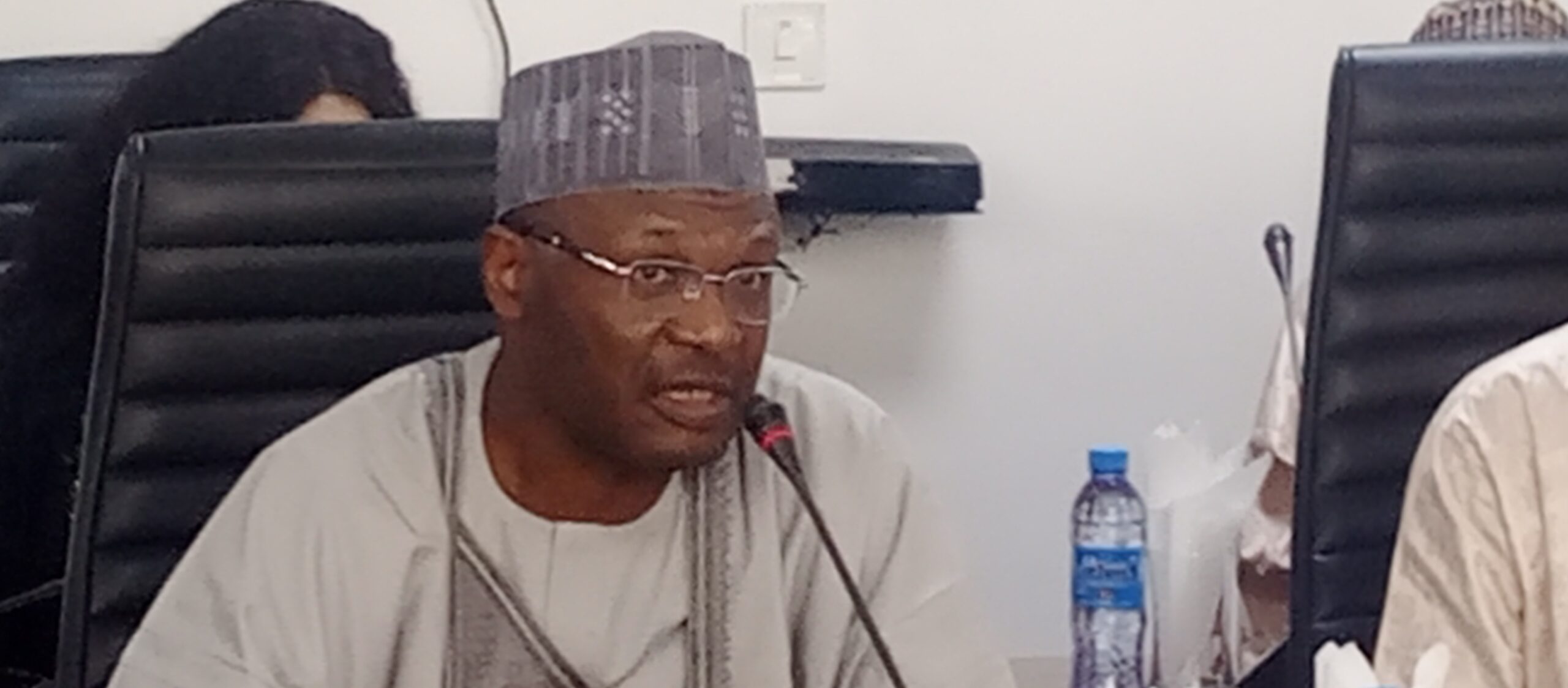
The Chairman, Independent National Electoral Commission, INEC, Professor Mahmood Yakubu has informed that the Nigerian Bar Association (NBA) has submitted list of four hundred and twenty-seven (427) lawyers across the country to prosecute the alleged two hundred and fifteen (215) case files received from the Nigeria Police for 2023 electoral offences.
The 215 case files are arrest and conclusion of investigation into electoral offences arising from the 2023 General Election by the Nigerian police.
The INEC Chairman who made this known at a meeting with Resident Electoral Commissioners in commencement of its post-election review engagement in Abuja on Wednesday said the lawyers volunteered to render pro bono services but would provide a token amount to cover for filing fees and expenses.
Prof Yakubu narrated that they are also working with the Economic and Financial Crimes Commission, (EFCC) and the Independent Corrupt Practices Commission, (ICPC) on the prosecution of cases related to vote buying and associated violations.
He explained that since the conclusion of the election, diverse opinions have been expressed by political parties, candidates, observers, analysts and the general public on aspects of the elections that took place in February and March saying that such diverse opinions are normally expected, and the Commission welcomes all of them as far as their purpose is to improve the future conduct of elections and to consolidate democracy.
“I can also confirm that we have received 215 case files from the Nigeria Police following their arrest and the conclusion of investigation into electoral offences arising from the 2023 General Election.
“We are working with the Nigerian Bar Association (NBA) to prosecute the alleged offenders. Already, the NBA has submitted a list of 427 lawyers across the country who have volunteered to render pro bono services to the Commission.
“They are not charging legal fees but by mutual agreement the Commission will provide a token amount to cover for filing fees/expenses. We are most grateful to NBA and its President, Yakubu Maikyau SAN, for this historic collaboration” he said.
INEC Chairman opined that the in line with INEC policy, at the end of the internal review and engagement with stakeholders, a comprehensive report will be published by the Commission snd made available for the general public.
“Still, we must acknowledge that there were also some challenges, which were structural, infrastructural and human in nature. Indeed, it is in furtherance of our determination to address the challenges as we prepare for future elections that the Commission is commencing its post-election review engagements today,” Yakubu noted.
“Furthermore, the Commission has so far received reports from 54 accredited national and international observers. We will give equal prominence to all the reports and review them in a holistic manner to ensure that necessary lessons are learnt from their conclusions and recommendations.
“As a Commission, we hope to continue to count on the support of stakeholders to improve the electoral process in Nigeria,” he said.
On the general assessment of the 2023 elections, Prof Yakubu said in spite of many challenges, there was a great improvement compared to previous elections in the country.
“Among the positive stories is that the security challenge which threatened to derail the elections did not materialise. Concerns that the polls will be disrupted by the perennial insecurity across the country fizzled out on Election Day as the elections were largely peaceful.
“Above all, despite the divergent opinions about the outcome of the election, the overall outlook suggests that it is a fair reflection of a complex multi-party democracy. We wish to remind Nigerians that elections were held for a total of 1,491 constituencies made up of one Presidential, 28 Governorship, 109 Senatorial, 360 Federal Constituencies and 993 State Assembly seats.
“Our record shows that these elections have produced the most diverse outcomes ever recorded since 1999. Today, five political parties produced State Governors, seven parties won Senatorial seats, eight are represented in the House of Representatives and nine in State Houses of Assembly.
“Clearly, the 10th National Assembly is certainly the most diverse in party representation since 1999. In some States around the country, different political parties controlled the legislative and executive arms of Government.
“What is clear from these records also is that the days of single party dominance of our national politics are probably gone. Furthermore, many prominent candidates lost in the constituencies they contested, and political parties lost in some of their presumed strongholds” Yakubu stressed.