By Reportcircle Abuja
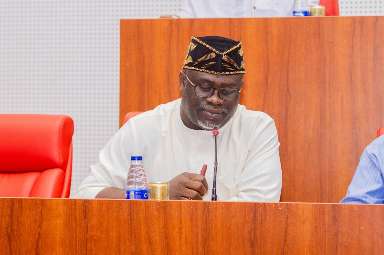
In a decisive first outing that signalled a sharp shift in Nigeria’s diaspora agenda, Senator Aniekan Bassey PhD, on Tuesday chaired his maiden meeting as the new Chairman of the Senate Committee on Diaspora, promising a tougher, faster, and more interventionist approach to the plight of Nigerians abroad.
Only appointed in July, barely days before lawmakers proceeded on annual recess, the Senator said his first task after returning to the plenary was to sit with Committee members and “reset the compass” of a Committee widely misunderstood by the public.
“Many people think the diaspora committee is just about traveling or meeting Nigerians abroad,” he said in a post-meeting briefing. “But our mandate is bigger, deeper, and more legislative.”
With NIDCOM as its primary agency, an advocacy body that follows the President on international engagements, Senator
Bassey noted that the Committee’s core power lies in lawmaking that supports NGOs, Civil Societies and the millions of Nigerians living abroad.
He recalled moving a motion earlier in the year on protecting Nigerians from trafficking, slavery, and human rights abuses in Libya, a motion later expanded to address xenophobic attacks in South Africa, Ghana, and other countries with troubling records of violence against Nigerians.
Senator Bassey disclosed that the Senate had already mandated a Joint Committee on Diaspora, Foreign Affairs, Judiciary & Human Rights, and Special Duties to review his motion and design a coordinated policy response.
“As lead Chairman, I must now sit with the three chairmen of the partnering committees to craft our engagement template,” he said. Work begins in two weeks.
In a striking move, the Senate Chairman on Diaspora announced that the Senate will begin advocacy missions to selected countries at least one per continent to gather firsthand information on the experiences, challenges, and legal ordeals of Nigerians abroad.
“We must be physically present,” he declared. We need to know which Nigerians broke the laws of those countries, and which ones are victims of malice, discrimination, or unfair business disputes.”
He said the Senate will open diplomatic channels, meet foreign legislators, and intervene in cases of Nigerians who are stranded, jailed, or wrongfully profiled.
Responding to questions about diaspora voting, an issue the previous committee chair claimed had already been ruled out the senator was cautious.
“Until the final report is out, nothing is concluded,” he insisted.
“And even if the Senate approves diaspora voting, it must still get the support of two-thirds of all 36 state assemblies. Without that, it dies.”
He emphasised that the Committee will engage Nigerians abroad, feel their pulse on the matter, and consult INEC, but cannot make unilateral commitments.
Pressed further on the widespread suffering of Nigerians abroad many jailed for unclear reasons the senator gave the strongest assurance of the day:
“Nigerians should be reassured. We are coming for them. If they are stranded, if they are jailed, we will intervene. We will not abandon them.”
Asked about non-Nigerians using Nigerian passports and identity documents to commit crimes or disguise their nationality, the senator drew a sharp line.
“If they got Nigerian documents legitimately, the law permits it after 10 years of residency. But if not, they will face the full wrath of the law.”
Senator Bassey’s opening session was less a familiarization meeting and more an unveiling of a sweeping mission: defend Nigerians abroad, tighten identity protections, confront xenophobia, examine foreign justice systems, and re-open the debate on diaspora voting.
For a Committee often seen as ceremonial, the Senator’s new posture suggests one thing Nigeria’s diaspora policy may be heading for its most activist phase yet.