By Joy Odor | Abuja
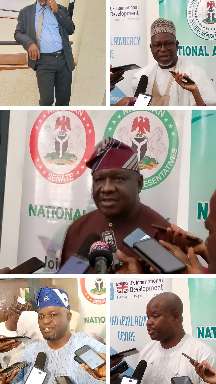
Nigeria’s democracy took center stage on Monday as lawmakers, civil society coalitions, and media advocates converged on the National Assembly for a high-stakes public hearing on the amendment of the 2022 Electoral Act, setting the stage for sweeping reforms that could reshape the nation’s political future ahead of the 2027 general elections.
The packed hearing, organized by the Joint Committee on Electoral Matters of the Senate and House of Representatives, saw impassioned appeals for transparency, accountability, and technological modernization of Nigeria’s electoral system.
In what could become one of the most consequential electoral shifts in Nigeria’s history, the National Assembly has proposed moving the Presidential and Governorship elections to November 2026, six months before the official expiration of the current administration’s tenure in May 2027.
The proposal, embedded in the draft amendment to the Electoral Act, mandates that all major elections be held not later than 185 days before the end of office of the incumbent.
Chairman of the House Committee on Electoral Matters, Hon. Adebayo Balogun, said the goal is to ensure all election litigations are concluded before elected officials are sworn in, a reform aimed at ending the recurring post-election courtroom battles that have tainted Nigeria’s democratic process.
“We’re proposing constitutional changes to reduce tribunal judgments to 90 days, appellate decisions to 60 days, and Supreme Court rulings to 35 days all within the 185-day window,” Balogun explained.
“This will end the era of candidates ruling under legal clouds. It’s a new dawn for electoral justice.”
Other proposed changes include early voting for security personnel, INEC officials, accredited journalists, and election observers; mandatory electronic transmission of results; and stiffer penalties for electoral officers who flout the law including fines of ₦1 million or one-year imprisonment for failure to transmit results electronically or for issuing unstamped ballot papers.
Balogun hailed the public participation as “democracy in action,” noting that over 90% of stakeholder submissions aligned with the committee’s draft reforms.
“We’re building an Electoral Act made by Nigerians, through Nigerians, for Nigerians,” he said. “Our aim is clear, a credible, transparent, and inclusive election in 2027.”
The International Press Centre (IPC), in a fiery memorandum presented during the hearing by the Comrade Lanre Arogundade, the
Executive Director demanded bold and uncompromising reforms to restore public confidence in the electoral process and protect press freedom.
“Credible elections are the foundation of democracy. Without trust, there is no legitimacy; without legitimacy, democracy cannot endure,” the IPC warned.
Drawing on findings from nationwide democratic dialogues involving over 500 stakeholders including journalists, INEC officials, and civil society groups IPC declared that Nigeria faces a “crisis of electoral confidence” following the fallout from the 2023 elections.
The Center identified five key pillars for rebuilding electoral integrity:
1. Transparency in election administration;
2. Accountability of political actors and security agencies;
3. Efficiency in logistics and communication by INEC;
4. Inclusivity for all eligible voters;
5. Firm sanctions for electoral misconduct.
IPC’s 16-point reform agenda called for:
Full institutional independence of INEC;
Creation of an Electoral Offences Commission;
Diaspora voting rights;
Reserved legislative seats for women, youth, and persons with disabilities;
Political party reforms to strengthen internal democracy; and
A stronger media protection framework during elections.
In an impassioned plea, IPC emphasized that media freedom is the oxygen of democracy and must be safeguarded through clear legal protections.
“Journalists must be free, protected, and unhindered during elections. A silenced press is a dead democracy,” the Centre stated.
Speaking on behalf of the National Chairman of Haipak Coalition, the Deputy National Chairman, Dr. Shukdantale representing four major political parties, submitted a comprehensive proposal demanding radical electoral reforms aimed at restoring transparency and fairness.
He said Nigeria must end the practice of swearing in contested winners while their cases remain unresolved in court.
“It’s not a level playing field when someone declared the winner uses public funds to fight his case. All litigations must be resolved before swearing-in to protect the sanctity of the ballot,” he declared.
Haipak’s recommendations include:
Mandatory use of BVAS and electronic result transmission (IReV);
All elections are held in one day to cut costs and curb voter apathy;
Legal provisions to ensure no voter is disenfranchised; and
Clear timelines for pre-election and post-election judicial processes.
“Nigeria must aim for elections as credible as those in South Africa or Canada,” he urged. “The world is watching.”
Echoing similar concerns, the West Africa Democracy Solidarity Network (WADEMOS) warned that Nigeria stands “at a crossroads” following declining public confidence after the 2023 polls.
Regional Advocacy Officer, Mr. Austin described the reform process as a “golden opportunity to rekindle hope and rebuild faith in democracy.”
“After 2023, voter trust hit rock bottom. If these reforms fail, the next election may witness record-low participation,” he cautioned.
WADEMOS urged lawmakers to digitize voter registration, simplify transfer of polling units, and ensure INEC’s funding is secured at least one year before elections to prevent political interference.
“INEC should never have to lobby for its budget. Election funding must be automatic, predictable, and insulated from politics,” Austin said.
He further criticized Nigeria’s weak, personality-driven party system, urging for digital transparency in party registers to prevent manipulation.
“You can’t build democracy on fake party membership lists. We need system-based politics, not personality cults,” he said.
INEC Commissioner Prof. Abdullahi Zuru commended the reform proposals, noting that they will enhance transparency, accountability, and public trust in the electoral process.
He said the Commission supports efforts to institutionalize early voting, strengthen result transmission, and streamline litigation timelines to reduce uncertainty and enhance stability.
As the curtain fell on the landmark hearing, one message resonated through the halls of the National Assembly: Nigeria’s democracy is at a turning point.
From lawmakers to journalists, activists to election observers, the consensus was clear, only bold, credible, and citizen-driven reforms can restore faith in the ballot box.
“These reforms are not optional,” the IPC declared in closing. “They are the lifeline for Nigeria’s democracy.”