By Joy Odor Abuja
Nigeria and the United States yesterday marked 20 years of a groundbreaking military-to-military health partnership that has saved tens of thousands of lives, transformed disease response, and fortified national security.
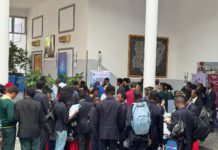
At a high-profile ceremony at the Abuja Continental Hotel, top defence and health leaders from both nations, including Minister of State for Defence, Dr. Bello Matawalle; U.S. Ambassador Richard Mills; Nigeria’s Chief of Defence Staff, General Christopher Musa; and senior commanders from the Walter Reed Army Institute of Research (WRAIR) hailed the achievements of the Nigeria Ministry of Defence Health Implementation Programme (NMODHIP) and its American counterpart.
Since its inception in 2005, the collaboration has:
Placed over 40,900 Nigerians on lifesaving HIV treatment.
Tested 1.6 million people, identifying 110,097 HIV cases.
Protected thousands of infants by enrolling HIV-positive pregnant women on treatment.
Trained 2,000 health workers and upgraded 50 laboratories nationwide.
Commissioned a state-of-the-art TB Modular Lab in 2024, bolstering Africa’s biosafety and diagnostic capacity.
“This partnership is a pillar of Nigeria’s defence health and national security,” Matawalle declared, pledging continued government backing.
Ambassador Mills described the collaboration as “a testament to the power of unity,” noting that it turned formidable challenges into extraordinary public health victories.
The program has gone beyond HIV to combat malaria under the U.S. President’s Malaria Initiative, strengthen biosecurity systems, and advance infectious disease research critical to global health security.
As it enters its third decade, officials on both sides vowed to scale up innovation and resilience to confront new health threats.
“From the barracks to communities, this partnership has been a lifeline,” said Brigadier General I.B. Solebo, Director General of NMODHIP.