By Joy Odor Abuja
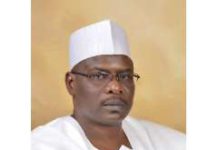
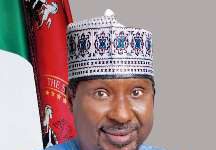
In an unfiltered, beat-by-beat account of Nigeria’s scientific journey in 2025, the Chairman of the Senate Committee on Science and Technology, Senator Iya Abbas, has opened up about the Committee’s breakthroughs, setbacks and the financial chokehold threatening the nation’s technological future.
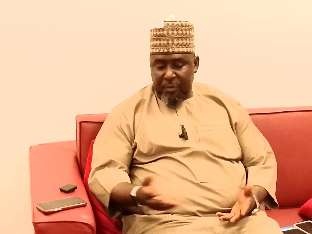
Speaking after a closed-door Exclusive interview with the National Assembly (NASS) Online Journalists in his office on Tuesday, Senator Abbas said 2025 arrived with “promises, turbulence, and tough lessons,” but insisted that the Science and Technology sector is still on a trajectory that could reposition Nigeria, if only funding stops crippling the system.
Senator Abbas revealed that the most transformative stride of the year is Nigeria’s impending launch of its own satellite the NASRDA-managed NigerSat, approved by the President in 2025.
“This satellite will be a game changer,” he said. “It will redefine national security, intelligence gathering, disaster forecasting and strategic planning.”
The only setback now? Procurement. Nigeria is stuck in the waiting room, waiting for funding, waiting for final approvals, waiting to join the league of nations that command their own space-based surveillance and forecasting tools.
Another bold move came from the National Board for Technology Incubation (NBTI).
According to Senator Abbas, the Senate has amended the enabling Act and established 59 incubation Centres across the country, with some states receiving two.
These Centres are expected to start operations in 2026, positioning young innovators, startups, women and tech-driven enterprises for global competitiveness.
“This is one of the biggest silent revolutions in our tech ecosystem,” he said. “These centres will become the backbone of innovation, entrepreneurship and job creation.”
One of the most anticipated reforms, the Local Raw Material Processing Bill, is no longer stuck in parliament.
“We have passed the bill in the Senate. The House has passed it. It’s now on the President’s table,” Abbas confirmed.
Once signed, Nigeria will ban the export of raw materials without local processing, a move expected to ignite manufacturing, create jobs, deepen value chains and reduce capital flight.
“This bill will change the economy,” Abbas said. “It empowers Nigeria to produce, refine, and benefit before exporting anything.”
Despite the achievements, Senator Abbas delivered a blunt verdict:
funding is the biggest enemy of science and technology in Nigeria.
He said the situation is now “national”, not sectorial:
Capital funds for 2024 were not fully released.
Capital funding for 2025 is stuck in limbo.
Approved projects are idle.
Award letters have been issued but cannot be executed.
Agencies are paralysed, waiting for disbursement.
“Funding is our biggest challenge, just like every other sector in Nigeria today,” he said.
“Without capital releases, all our planning remains on paper.”
Senator Abbas says the entire pipeline of science and technology projects is “ready to explode with activity” in 2026, but only if early-year funding is released.
“Everything is in place,” he said.
“Projects have been designed, procurement processes done, award letters issued. Just release the funds and Nigeria will see results immediately.”
While the sector recorded major policy gains, it also suffered internal turbulence including the controversial change of minister in the Science and Technology ministry.
“That issue brought its own complications,” Abbas noted, without delving into details.
From satellite ambitions to innovation hubs, and from raw material reforms to national security advances, Nigeria’s science ecosystem is sitting on its most promising blueprint in years.
But as Senator Abbas made clear, the future of Nigeria’s technological resurgence depends entirely on one thing, funding.
Until then, the country watches, waits, and hopes the promised revolution doesn’t gather dust on government shelves.