By Joy Odor Reportcircle News
In a bold move to lock down transparency around one of Nigeria’s most emotionally charged and financially sensitive systems, the Pension Transitional Arrangement Directorate (PTAD) on Thursday opened its operations to the full glare of the media, declaring that the future of pension reform now rests as much in public communication as it does in policy execution.
The declaration was made at a high-powered training workshop for Association of Corporate Online Editors Online (ACOE) and Pension Correspondents where the Executive Secretary of PTAD, Tolulope Odunaiya, warned that misinformation, poor understanding and digital distortions now pose one of the biggest threats to pension stability in Nigeria.
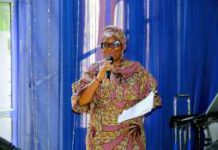
Odunaiya, who was represented by the Director, Corporate Services Department, Kabiru Yusuf, described the media as not just observers of pension reform, but as active custodians of public trust in a system that directly affects millions of retired Nigerians.
“This is no longer just about paying pensions,” Odunaiya said. “It is about preserving dignity, protecting livelihoods and restoring confidence in government promises.”
Odunaiya said the one-day training was deliberately designed to expose journalists to the engine room of PTAD’s mandate, including the laws that birthed the agency, its operational departments, payment processes and future reform blueprint.
The goal, she said, is to eliminate reporting errors that often arise from knowledge gaps and to establish a new era of fact-driven, technically accurate pension journalism.
“Reporters must understand where we are coming from, where we are today and where we are headed,” she said. “Without that, accurate reporting becomes impossible.”
For decades, pension management under the Defined Benefits Scheme (DBS) was a graveyard of delays, unpaid arrears, manual records and institutional loopholes that swallowed benefits meant for retired workers.
Odunaiya said PTAD was created specifically to dismantle that structure and that after years of institutional rebuilding, the results are now visible.
“PTAD has worked assiduously to change the narrative of pension payment in Nigeria,” she said. “We are proud that our reforms are yielding measurable results.”
She added that the Directorate now stands as the primary shield protecting the welfare of DBS pensioners, many of whom served the nation for decades before retirement.
More than a routine capacity-building programme, the workshop marked the formal enlistment of journalists as operational partners in pension reform.
PTAD acknowledged that without accurate reporting, public misunderstanding can derail even the strongest government reforms.
The agency said it intends to use the workshop to correct longstanding misrepresentations, clarify grey areas in pension management, and prepare journalists for the next phase of reforms.
“As our partner in progress, we rely on the media to help ensure our mandate is fulfilled,” Odunaiya said.
Unlike conventional government engagements, the workshop was framed not as a talk shop but as a strategic reset between policy managers and public communicators.
“Today is not a day for long speeches,” Odunaiya declared. “It is a day to learn, relearn, unlearn and rebuild collaboration.”
This approach reflects PTAD’s recognition that Nigeria’s pension system now operates in an era of instant digital narratives, viral misinformation and emotional public reaction making media literacy as crucial as financial literacy.
With pension payments tied directly to survival for millions of retirees, analysts say PTAD’s decision to openly train journalists signals a new phase in public-sector accountability where communication failure is now treated as a systemic risk.
As Nigeria pushes deeper into digital public finance systems, PTAD is positioning itself not just as a payment agency, but as a public trust institution whose survival depends on credibility in the court of public opinion.
And on this battlefield, the Directorate has made it clear: the media is no longer watching from the sidelines.