By Reportcircle Abuja
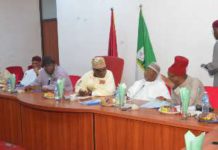
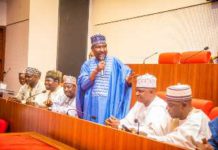
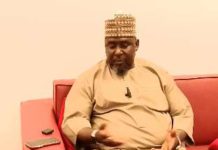
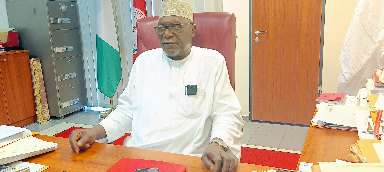
Nigeria’s Senate was shaken on Tuesday as Senator Yahaya Abdullahi delivered a grim, unvarnished account of the latest assault on education in the North, an attack that left the Vice Principal of Maga Comprehensive High School dead and several schoolgirls abducted.
“Let’s be clear,” the senator said, voice heavy. “They killed the Vice Principal. The Kebbi State government has confirmed it.”
In an impromptu briefing with National Assembly Online Journalists that pulsed with anger, frustration, and a stark warning for the country’s future, the former Senate Leader in the 9th Assembly lamented that the situation remained dire, with no confirmed updates on the missing students.
“What I said is what I know. I cannot tell lies,” he stressed. “Tomorrow at the Senate, I will know more.”
Perhaps the Senator’s most explosive remarks came when he challenged both the Executive and the legislature to rethink their legitimacy.
“If we know we cannot secure the people of this country,” he said, “let us abdicate. Let the president order that all of us resign. Let fresh elections be held for people who can protect Nigerians.”
It was a jarring moment, one rarely heard in public discourse from a senior lawmaker, underscoring the depth of frustration as Nigeria’s insecurity crisis deepens.
As the briefing ended, Abdullahi’s final words lingered like an indictment of the state itself:
“If you cannot secure life, what are you doing as a government?”
The Senate, he earlier said, condemned the “distardly act” in the strongest terms and pressed the Federal Government to act swiftly to rescue the girls and bring the perpetrators to justice.
But beyond condemnation, the Lawmakers made a striking admission: Nigeria’s security forces are overstretched to breaking point.
The Senate called on President Bola Tinubu to urgently recruit at least 100,000 additional military personnel, describing the move as unavoidable if Nigeria is to reclaim territories long surrendered to bandits and terror groups.
In a move likely to spark national debate, the Senate resolved to establish a Committee to investigate the Safe School Initiative once touted as the country’s most promising shield against attacks on learners.
Lawmakers intend to probe how much funding the programme received, how it was spent, and why it has failed so catastrophically to protect schools.
“The Senate was very concerned about the recurrence of this kind of activity,” Abdullahi said. “What have children got to do with any of this?”
The Senator Abdullahi tone sharpened as he criticised the divisive rhetoric that often emerges after such attacks.
“When bandits come, they don’t ask whether you are a Christian or a Muslim,” he said. “They are criminals. They kill you or steal your property. Yet here we are, dividing ourselves instead of uniting to fight them.”
He warned that Nigeria’s inability to protect its youngest citizens threatens its very survival:
“Any nation that cannot protect its children is oblivious of its own future. Even animals instinctively protect their young.”
The former Senate Leader painted a bleak picture of the security vacuum beneath the surface of rural Nigeria.
He revealed that many local governments in Kebbi State some the size of Enugu or Imo have fewer than 100 policemen to safeguard populations approaching a million people.
“How can 100 policemen secure an entire local government?” he asked. “Not just the schools, the whole area is not secure.”
According to him, even when schools reopen after temporary closures, the manpower available is nowhere near enough to withstand coordinated attacks.
Asked whether Nigeria should now seek foreign military assistance, Abdullahi was emphatic: “No nation calls itself a country if it cannot secure its people. Must we import people to protect our children? What are we doing here then?”
He dismissed comparisons to countries like Ecuador where citizens debated hosting foreign bases. For Nigeria, he said, sovereignty is meaningless without security.