…As ASUU Dares FG to Act or Face Total Shutdown
By Joy Odor | Abuja
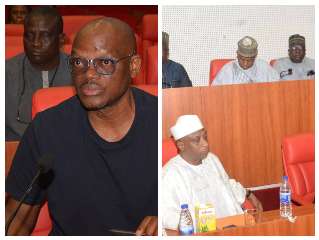
The battle for the soul of Nigeria’s ivory towers reached a boiling point on Friday as the Senate Committee on Tertiary Institutions and TETFund met behind closed doors with the Academic Staff Union of Universities (ASUU) in a tense session that laid bare decades of neglect, broken promises, and mounting anger within the nation’s university system.
The high-stakes meeting, chaired by Senator Mohammed Dandutse Muntari (Katsina South), brought ASUU face-to-face with lawmakers in a bid to avert a full-blown academic shutdown as the union’s two-week warning strike bites deeper.
In a blistering presentation, ASUU President, Professor Chris Piwuna, lambasted the Federal Government’s failure to honour agreements and fund tertiary education adequately, declaring that Nigerian lecturers are now the poorest paid in Africa.
“A professor in South Africa earns ₦6 million monthly, in Ghana ₦1.5 million but in Nigeria, a full professor earns less than ₦500,000,” he said bitterly. “Our salaries can’t attract serious scholars from anywhere. Even colleagues in Uganda and Zimbabwe earn far more. This is a national disgrace.”
The Union warned that the country’s best brains are fleeing to foreign universities due to poor pay and unbearable working conditions, leaving behind a hollow system struggling to sustain itself.
Professor Piwuna accused the government of “deliberate neglect” of the 2009 Agreement, which has been due for renegotiation since 2012.
He revealed that a new draft agreement completed in December 2024 by the Alabi Aira-led Committee was ignored until the union commenced strike action.
“We’ve been patient, but patience has its limits,” he said. “The government only remembers us when we down tools. That’s not how nations grow.”
The Union also demanded the payment of three-and-a-half months’ withheld salaries, unremitted pension deductions, and the release of ₦50 billion revitalization funds currently “trapped” at the Ministry of Education.
“The Senate appropriated that money for universities, not for colleges or polytechnics,” ASUU stated. “The Ministry is playing politics with education. We want the Senate to compel them to release it immediately.”
ASUU further raised alarm over what it described as an attempt by the FCT Minister to seize portions of the University of Abuja’s land, originally allocated for academic and agricultural use.
“That land is crucial for research, expansion, and innovation,” the union warned. “If the Minister succeeds, he would be choking the future of education in the capital.”
Reacting, Senator Olubiyi Fadeyi condemned the deterioration in Nigerian universities and backed the lecturers’ outcry.
“We are all products of Nigerian universities, and what we see today is heartbreaking,” he said. “ASUU’s demands are not unreasonable. What’s unacceptable is government’s habit of signing agreements and abandoning them.”
Committee Chair Senator Muntari assured the union that the Senate would not fold its arms while universities crumbled.
“You cannot teach when your stomach is empty,” he admitted. “We will engage the Executive and ensure these issues are addressed once and for all.”
ASUU declared that the industrial action could be called off within 24 hours if the government demonstrated genuine commitment to resolving the crisis.
“We don’t want students at home or parents losing sleep,” the union said. “Give us reason to believe, and we’ll end this strike immediately.”
However, the lecturers insisted that without real reforms not political promises peace in Nigerian universities would remain an illusion.
In his closing remarks, Senator Muntari pledged that the committee would submit a comprehensive report to the Senate President, urging President Bola Ahmed Tinubu to personally intervene.
“We will not let this matter rest,” he vowed. “Education is the backbone of national development and the Senate will not stand by while our universities collapse.”
Bottom Line
Nigeria’s ivory towers are once again on the brink. ASUU has issued an ultimatum fund education now, honour agreements, and pay what’s owed or risk plunging the nation’s universities into a deeper, avoidable crisis.