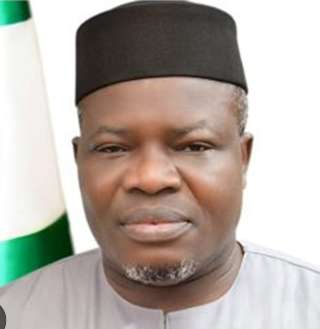
By Joy Odor | Abuja | October 23, 2025
Nigeria’s Surveyor-General, Abduganiyu Adeyemi Adebomehin, has declared that the next two years of his extended tenure will be devoted to a full remapping of the country, describing it as a national priority and the bedrock for sustainable development.
Speaking during an interview in Abuja on Thursday following the extension of his tenure, Adebomehin said the move was in line with United Nations recommendations that every country should remap its capital and major cities every three years to support effective planning, infrastructure, and economic growth.
“My focus will be to remap Nigeria for accelerated development in line with the UN recommendation and President Bola Ahmed Tinubu’s Renewed Hope Agenda,” he said. “If there’s only one thing we achieve before the end of my tenure, it will be a complete remapping of Nigeria.”
The Surveyor-General emphasized that mapping is essential to national identity, infrastructure, and security, noting that Nigeria’s last comprehensive mapping was done in the 1970s, over five decades ago.
“It is only when we map Nigeria that we truly define the country, including its international boundaries with Cameroon, Benin Republic, and Niger,” Adebomehin said. “Imagine how much our roads, cities, and settlements have changed since then. The need to update our maps is urgent.”
He added that modern mapping, driven by the National Geospatial Data Infrastructure (NGDI), will help identify and analyze key national assets such as schools, hospitals, markets, farms, and security risk zones, all in digital formats accessible through central data servers.
“With accurate geospatial data, we can easily determine the location and number of hospitals per state, school distribution, and even volatile areas, all crucial for governance and planning,” he explained.
Highlighting the critical role of surveying, Adebomehin described it as the “silent driver” of the 17 Sustainable Development Goals (SDGs), cutting across sectors such as infrastructure, urban planning, environment, and energy.
“Surveying is so crucial that it requires precision and caution. Whether you’re building roads, bridges, or cities, you can’t do it without accurate data,” he said. “Even with the rise of digital technology, Geodesy, the science of measuring and understanding the Earth’s shape, orientation, and gravity, remains central to our profession.”
Adebomehin, however, identified inadequate funding as the major obstacle to Nigeria’s remapping effort.
“Funding is our biggest challenge,” he said. “The UN recommends that every capital city be remapped every three years on a large scale to avoid data suppression, yet we haven’t done that in decades.”
He argued that investment in mapping always yields high returns by enabling better education, improved economic planning, and good governance.
“Whatever we spend on remapping, the country will gain it back many times over,” he said. “If I had the resources today, I would begin remapping Nigeria immediately.”
Adebomehin reaffirmed his commitment to building a modern geospatial data system that aligns Nigeria with global standards, supports the Renewed Hope development agenda, and strengthens national security through accurate territorial data.
“Mapping is not just about geography,” he concluded. “It is about governance, growth, and our future as a nation.