… As Pate Unveils 2025–2030 Blueprint for Transformation
By Joy Odor, Abuja
In a historic leap for Nigeria’s health sector, the administration of President Bola Ahmed Tinubu has scaled up enrolment in nursing and midwifery schools from 28,000 to a record-breaking 115,000, signaling the most ambitious health workforce expansion in the nation’s history.
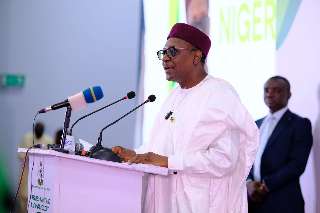
The announcement was made by the Coordinating Minister of Health and Social Welfare, Prof. Muhammad Ali Pate, CON, during the National Nursing Summit and official launch of the Nigeria Strategic Directions for Nursing and Midwifery (NSDNM) 2025–2030 in Abuja.
Describing the blueprint as a “practical guide for reform, innovation, and investment”, Prof. Pate said the initiative will overhaul Nigeria’s nursing and midwifery ecosystem—strengthening education, leadership, service delivery, and workforce distribution across all levels of healthcare.
“Nurses are at the core of the resilience of Nigeria’s health system,” Pate declared. “This strategy is not just another document, it is a roadmap to build a skilled, motivated, and equitably distributed workforce capable of delivering quality care to every Nigerian.”
Under President Tinubu’s Health Sector Renewal Investment Initiative, the Federal Ministry of Health has made unprecedented investments to expand medical education, retain talent, and fill critical workforce gaps.
“The enrolment quota for nursing and midwifery institutions has surged from 28,000 in May 2023 to 115,000 for the 2025 academic year,” Pate announced to thunderous applause. “This leap will empower Nigeria to train more nurses, midwives, pharmacists, and doctors to meet both national and global health needs.”
The Minister also revealed that the Federal Government has approved recruitment waivers for 20,000 new health workers 60 percent of whom will be nurses and midwives, while over 69,000 frontline health professionals have been retrained nationwide under the ongoing reform agenda.
“Our commitment goes beyond rhetoric. These are tangible actions strengthening our health system from the ground up,” he said.
Pate commended the World Health Organization (WHO) for its technical and financial support in developing the NSDNM, aligning Nigeria’s reforms with the WHO Global Strategic Directions for Nursing and Midwifery (2021–2027).
He also highlighted Nigeria’s groundbreaking adoption of the Best Practice Spotlight Organization (BPSO) model, developed in partnership with the Registered Nurses Association of Ontario (RNAO), making Nigeria the first country in West Africa to implement the evidence-based framework that has already improved maternal and neonatal outcomes.
“We are proud to be pioneers of this model in Africa,” Pate said. “It underscores our resolve to elevate the nursing and midwifery professions through knowledge, innovation, and accountability.”
In her remarks, Permanent Secretary of the Ministry, Daju Kachollom, mni, inaugurated the Technical Working Group (TWG) to oversee the NSDNM’s implementation, calling it “the bridge between ideas and impact.”
“You are not here to re-discuss the strategy,” she charged. “Your task is to drive implementation and ensure accountability at every stage.”
Similarly, Prof. Saleh Ngaski Garba, Head of Nursing Science at Bayero University, Kano, reminded stakeholders that nurses and midwives make up nearly 60% of Nigeria’s health workforce, emphasizing their indispensable role in achieving Universal Health Coverage (UHC) and the Sustainable Development Goals (SDGs).
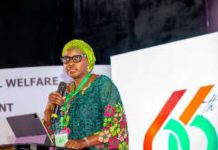
Delivering a goodwill message on behalf of the WHO Country Representative, Mary Brentrow hailed Nigeria’s bold reforms, describing investment in nursing and midwifery as “a strategic investment in resilience, gender equity, and economic growth.”
The NSDNM 2025–2030, now officially launched, sets Nigeria on a transformative path toward achieving Universal Health Coverage, improving maternal and neonatal outcomes, and positioning the country as a regional leader in health workforce development.
“This is a national mission,” Prof. Pate concluded. “With collective action, we can transform nursing and midwifery into engines of equity, resilience, and hope for every Nigerian.”