…As Pate, Salako, Edun unveil sweeping sector overhaul
By Joy Odor, Abuja
Nigeria’s health sector has posted its strongest performance in over a decade, with 84 percent of national reform targets achieved under President Bola Ahmed Tinubu’s flagship Health Sector Renewal Investment Compact, the Federal Government announced yesterday in Abuja.
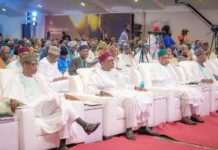
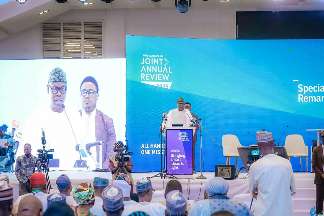
The revelation came at the 2025 Nigeria Health Sector-Wide Joint Annual Review (NHSW-JAR), themed “All Hands, One Mission: Bringing Nigeria’s Health System to Light”, where top officials unveiled bold plans to double health funding, expand insurance, and cut maternal and child deaths by half before 2030.
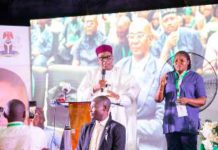
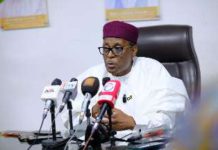
Coordinating Minister of Health and Social Welfare, Professor Muhammad Ali Pate, told the packed hall that the country is witnessing “one of the most promising chapters in Nigeria’s health history.”
“Under President Tinubu’s decisive leadership, we are moving from fragmented, donor-driven projects to coherent, nationally owned systems that deliver measurable results for Nigerians,” he declared.
So far, 35 states and the FCT have completed Joint Annual Health Reviews aligned with the national blueprint.
All 774 local governments now host National Health Fellows and Public Finance Management Officers, surpassing federal benchmarks.
Early data paint a striking picture:
Maternal deaths down 17 percent and newborn mortality down 12 percent across 172 high-burden LGAs under the Miyami Model.
Skilled birth attendance up 33 percent, with over 4,000 free caesarean sections performed in NHIA-accredited hospitals.
Emergency obstetric care now fully covered under the national insurance benefit package.
Visits to Basic Health Care Provision Fund (BHCPF) facilities jumped from 10 million in 2024 to 45 million by mid-2025, while vaccination coverage hit record highs after the introduction of the HPV vaccine, hailed internationally as a “global milestone.”
Minister of State for Health, Dr Iziaq Salako, announced that the government plans to raise the BHCPF allocation from 1 to 2 percent of the Consolidated Revenue Fund, effectively doubling the sector’s guaranteed financing.
“This will close funding gaps, empower states, and strengthen the primary-health-care backbone of our system,” Salako said.
He added that 21 new national health policies, 13 federal tertiary institutions, and six cancer centres of excellence are already in motion under the Renewed Hope Agenda, alongside expanded health-insurance coverage and digital connectivity for thousands of facilities.
The reforms, Salako noted, could save Nigeria ₦4.8 trillion annually from preventable diseases and cut ₦850 billion lost to medical tourism.
Through the Nigeria Digital in Health Initiative, millions of patient encounters are now recorded on the National Digital Health Architecture, linking facilities nationwide.
“We are producing more health workers, retaining them better, and engaging Nigerians abroad as contributors to the system,” Salako said. “Our Power 4 Health project is tackling energy poverty so hospitals never go dark again.”
Coordinating Minister of the Economy and Finance Minister, Wale Edun, announced that the health budget has grown by nearly 60 percent, rising from ₦131.5 billion in 2024 to almost ₦299 billion projected for 2026.
That jump lifts health’s share of the national budget from 3 percent to 5.2 percent, the sharpest increase in years.
“The turnaround in the economy has begun, and health is one of the biggest beneficiaries,” Edun said, urging states to match federal investment with their own commitments.
Minister of Budget and Economic Planning, Senator Atiku Bagudu, added that revenue-mobilisation reforms under Tinubu’s Renewed Hope Agenda would push Nigeria’s chronically low revenue-to-GDP ratio above 8 percent and channel new resources into health and education.
Chairman of the Nigeria Governors’ Forum and Kwara State Governor, AbdulRahman AbdulRazaq, hailed the recent ₦32.9 billion disbursement for primary-health care as “a game-changer that has improved transparency and state-level planning.”
Traditional and faith leaders echoed the sentiment. Representing the Sultan of Sokoto, Emir of Shonga Alhaji Yahaya Haliru pledged full royal support for universal health coverage.
Professor Samson Fatokun, representing the Christian Association of Nigeria (CAN), affirmed the Church’s readiness to partner government in “delivering equity and accountability in health service delivery.”
While celebrating progress, Pate admitted that affordability remains a major hurdle.
The government, he said, is scaling up social health protection through expanded insurance schemes and a Medical Relief Programme to cut out-of-pocket spending.
The Ministry is also finalising plans to recruit 20,000 new frontline workers and has cleared ₦50 billion in arrears and allowances across professional cadres.
“Our mission is simple,” Pate declared. “Put the Nigerian person at the centre of attention; when that happens, everything else will fall into place.”
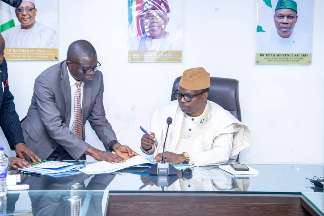
The conference closed with an updated Health Sector Renewal Compact, endorsed by federal and state governments, development partners, traditional institutions, and civil society, a reaffirmation of the pact first signed in 2023.
“We are not merely reforming Nigeria’s health system,” Pate said in closing. “We are rebuilding trust, restoring efficiency, and renewing hope for every Nigerian family.”
From funding to faith, from data to delivery, the 2025 Health Review shows a sector finally moving from promise to performance.
With maternal deaths falling, funding rising, and digital systems expanding, the message from Abuja was unmistakable:
Nigeria’s health renaissance has begun and this time, the numbers back it up.