by Joy Odor
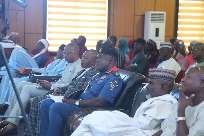
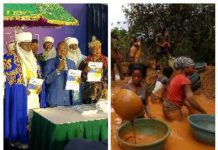
A thunderous call for justice and equity echoed through Abuja as hundreds of community leaders, traditional rulers, civil society advocates, miners, and policymakers from across West Africa gathered for the 5th West African Mining Host Communities Indaba, held from September 22–26, 2025.
The week-long summit, themed “Contextualizing Green Mining within the Principle of Free, Prior, and Informed Consent (FPIC),” became a rallying point for what participants called a continental awakening, a demand that Africa’s mining future must no longer be written by foreign interests or corporate greed, but by the voices of its people.
“This is our soil, our sweat, our future and we refuse to be spectators in our own story,” one delegate from Ghana declared to resounding applause.
Kicking off with a powerful Just Energy Transition (JET) Side Session, the Indaba warned that the global race for “green minerals” lithium, cobalt, and rare earths risks becoming a new scramble for Africa if not guided by justice, transparency, and genuine community consent.
Delegates insisted that “green mining” cannot be an excuse for continued exploitation under a fresh slogan.
They bemoaned that without grounding in FPIC, environmental protection, gender equality, and transparency, they warned, the so-called transition could devastate communities just as deeply as past extractive regimes.
The communique laid bare a catalogue of failures haunting the subregion’s mineral governance:
Outdated and weak mining laws riddled with contradictions and loopholes that empower corruption and impunity.
Environmental destruction through deforestation, toxic waste, and mercury poisoning threatening food security and health.
Systemic exclusion of women, youth, and persons with disabilities from decision-making, benefit-sharing, and leadership roles.
Economic injustice, where raw minerals leave African shores unprocessed while host communities sink deeper into poverty.
Participants condemned the global forums COP summits and UN business platforms for being dominated by corporate interests from the Global North while the real victims of mining remain voiceless and invisible.
The Indaba reaffirmed that Free, Prior, and Informed Consent is not a token checkbox but a fundamental human right. Communities, it declared, must have the power to say “no” to harmful projects and to negotiate as equal partners throughout the mining cycle.
Delegates called for:
Transparent Community Development Agreements (CDAs) translated into local languages;
Establishment of Advocacy and Legal Support Clinics to defend community rights;
Creation of a Mining Host Community Observatory and Development Scorecard to track real impacts and hold both companies and regulators accountable.
A recurring theme throughout the week was a passionate insistence that environmental protection and climate justice must be the backbone of mining reform.
Speakers demanded:
Urgent remediation of mercury and toxic waste pollution;
Grievance-redress systems for affected communities;
Protection of environmental defenders from harassment and violence;
Climate-smart mining standards to be legally enforced, not merely promised.
“West Africa must not trade one form of exploitation for another,” the communique declared. “The global energy transition must be just or it will not be sustainable.”
The Indaba spotlighted gender justice as a non-negotiable pillar of reform.
Participants demanded gender audits of mining operations, gender-responsive budgeting, and inclusion of women in every level of mining governance.
It also called for targeted programs to support women miners, build leadership capacity, and protect against gender-based violence in mining zones.
“A mining future without women is a stolen future,” one activist stated bluntly.
In a historic move, participants endorsed the creation of a West African Federation of Mining Host Communities, a regional alliance to coordinate advocacy, monitor reforms, and speak with one collective voice.
The Federation will push for harmonized laws, shared accountability mechanisms, and stronger civil society–media collaboration to expose violations and amplify community struggles.
The Indaba ended with a fiery appeal to world leaders ahead of COP30 and the G20:
“No energy transition can be fair if it rests on the broken backs of African communities.”
Delegates also called for:
Creation of a Global Extractives Justice Fund for environmental restoration and community health;
Mandatory sourcing of transition minerals under verified justice standards;
Community Energy Transition Agreements (CETAs) ensuring local benefit and revenue retention;
A binding G20 Fair Value Distribution Pact so that wealth extracted from African soil powers African development.
Unanimously adopted on September 26, 2025, the West African Mining Host Communities Indaba Communique stands as a declaration of defiance and dignity, a continental manifesto demanding an end to exploitation disguised as development.
“Africa’s minerals are not a curse but the curse will continue unless justice, equity, and people’s power reshape the future of mining.”
The 2026 Indaba will reconvene to assess implementation. But for now, the rallying cry reverberates across the continent
“No Justice, No Mining!”